
Outdoor Lighting Ideas That Improve Curb Appeal and Security
Spring in Lincoln brings longer evenings, blooming landscapes, and more time spent outside with family and neighbors. That extra daylight is the perfect reason to rethink how your home looks after sunset. Outdoor lighting does more than make your property pretty; it protects your home, guides guests safely to the door, and highlights the features you worked hard to build. A smart lighting plan blends beauty with function, giving you peace of mind and a front yard that stands out on the block. This guide walks through practical outdoor lighting ideas that boost curb appeal and strengthen home security at the same time.
Outdoor Lighting Ideas That Boost Curb Appeal
Curb appeal starts the moment someone turns onto your street, and good lighting makes sure that first impression carries into the evening. The right fixtures frame your home, draw the eye to key architectural details, and create a warm welcome for anyone pulling into the driveway. Layered lighting feels natural because it mimics the way sunlight touches a home throughout the day. Homeowners in Lincoln and across Placer County are moving away from a single floodlight and toward thoughtful designs that use multiple soft sources. The goal is to make the house look inviting without blinding anyone who walks up the path. Done well, outdoor lighting raises property value and makes your home the one people notice.
Outdoor Lighting Ideas for Pathways and Walkways
Pathway lighting is one of the easiest ways to lift curb appeal while adding real safety value. Low-voltage path lights placed every six to eight feet create a steady rhythm of light that guides visitors from the sidewalk to the front door. Spacing matters here; lights set too close together look cluttered, and lights set too far apart leave dark gaps where someone could trip. Choose fixtures with shielded tops so the glow points down onto the walkway instead of glaring into eyes. Warm color temperatures around 2700K to 3000K give a soft, welcoming feel that matches most home styles. For stone or brick paths, bronze or matte black finishes blend in during the day and disappear at night. A licensed electrician can run buried low-voltage lines that stay hidden, keeping the yard clean and polished.
Step lighting deserves just as much attention as the walkway itself. Recessed riser lights installed inside each step tread prevent falls and give porches a custom, high-end look. These fixtures use tiny LED modules that draw very little power yet last for years. Many homeowners pair step lighting with matching hardscape lights tucked under seat walls or planter caps. The effect is layered and elegant without feeling staged. Proper wiring behind masonry requires planning, which is why professional installation matters for a clean result.
Driveway lighting rounds out the entry sequence and pulls the whole front of the home together. Bollard lights or short column lights lining the drive add structure and scale, especially on longer approaches. Motion-activated driveway lights welcome you home with a soft rise in brightness as you pull in. Pairing path, step, and driveway fixtures on the same control system keeps the look unified and lets you dim or brighten zones with a single tap. For homeowners who want both beauty and function, this layered approach delivers. Need help designing a walkway lighting plan? Click here for our outdoor lighting installation service.
Outdoor Lighting Ideas for Landscape and Garden Features
Landscape uplighting turns ordinary trees and shrubs into evening focal points. A single well-placed uplight at the base of an oak or Japanese maple casts the branches in soft silhouette against the night sky. Narrow beam angles work best for tall, slender trees, while wider beams suit full, bushy forms. Brass and copper fixtures age beautifully outdoors and resist the moisture and temperature swings common in Northern California. Burying the wiring keeps the yard looking natural during the day. A thoughtful uplighting plan usually features three to five accent trees rather than blasting every plant on the property. Less is almost always more when it comes to garden lighting.
Garden bed and planter lighting adds a second layer of interest closer to the ground. Small spot fixtures aimed at boulders, ornamental grasses, or flower beds bring texture and color into focus after dark. Downlighting from a nearby tree, sometimes called moonlighting, casts a gentle pattern of leaves across the lawn and patio. This technique is one of the most requested looks for backyard entertaining spaces. The fixtures stay hidden up in the canopy, so guests see only the effect. Proper mounting and weatherproof connections are critical for fixtures placed high in a tree.
Water features and seasonal plants deserve their own spotlight, quite literally. Submersible lights inside a pond or fountain make the water shimmer and turn a daytime feature into a nighttime centerpiece. For roses, hydrangeas, and other seasonal blooms, adjustable spotlights let you shift the focus as the garden changes through spring and summer. Smart controllers allow scheduling so lights turn on at dusk and dim later in the evening. Quality transformers protect the whole system from voltage drops that shorten bulb life. A professional design balances brightness, color, and placement for a garden that looks magazine-ready every night.
Outdoor Lighting Ideas for Architectural Accents
Wall washing is a simple technique that produces a huge visual payoff. Fixtures placed close to the base of the house send a smooth sheet of light up textured stone, stucco, or brick. This approach flatters older homes with character-rich exteriors and gives newer homes a sculpted, custom look. Color temperature should match any interior lights visible through the windows to keep the whole home feeling cohesive. Fixtures with glare shields keep the beam on the wall and out of your neighbor’s bedroom. The result is a home that reads as finished and intentional from the street.
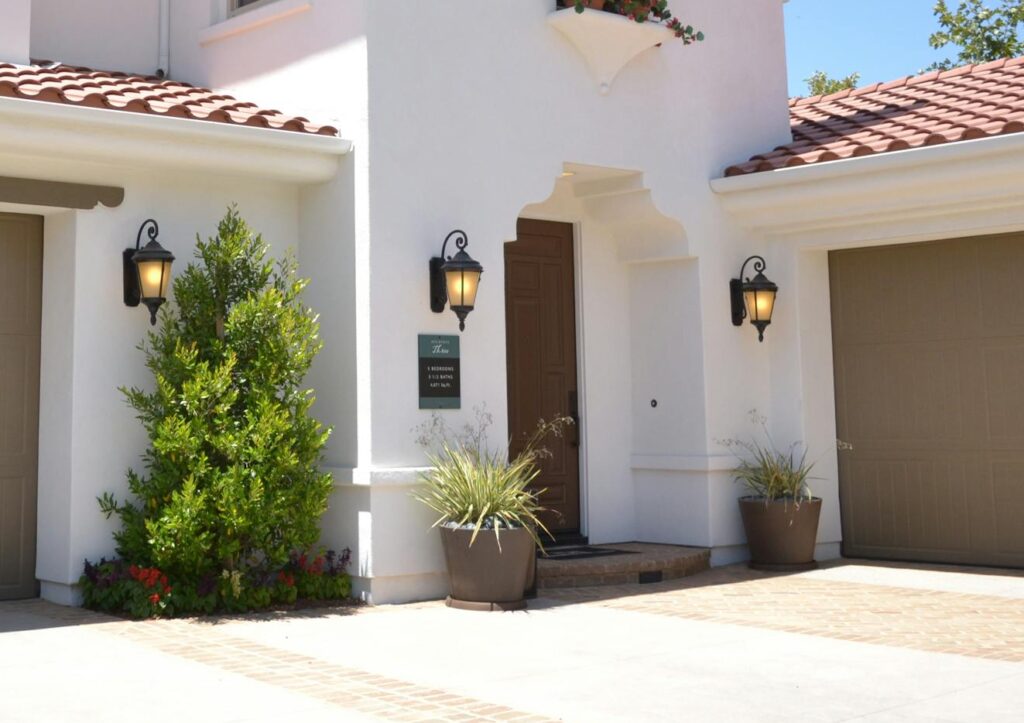
Column and post lighting frames entryways and gives the front of the home a sense of scale. Lantern-style sconces flanking the garage or front door remain a classic choice, and modern cylinder downlights offer a cleaner, updated alternative. Matching the finish to your house numbers, door hardware, and mailbox pulls the whole front elevation together. Dusk-to-dawn photocells turn these fixtures on automatically, so the home never looks dark or empty. LED lamps rated for wet locations last far longer than old incandescent bulbs and use a fraction of the energy. This is one of the highest-impact upgrades you can make in a single afternoon.
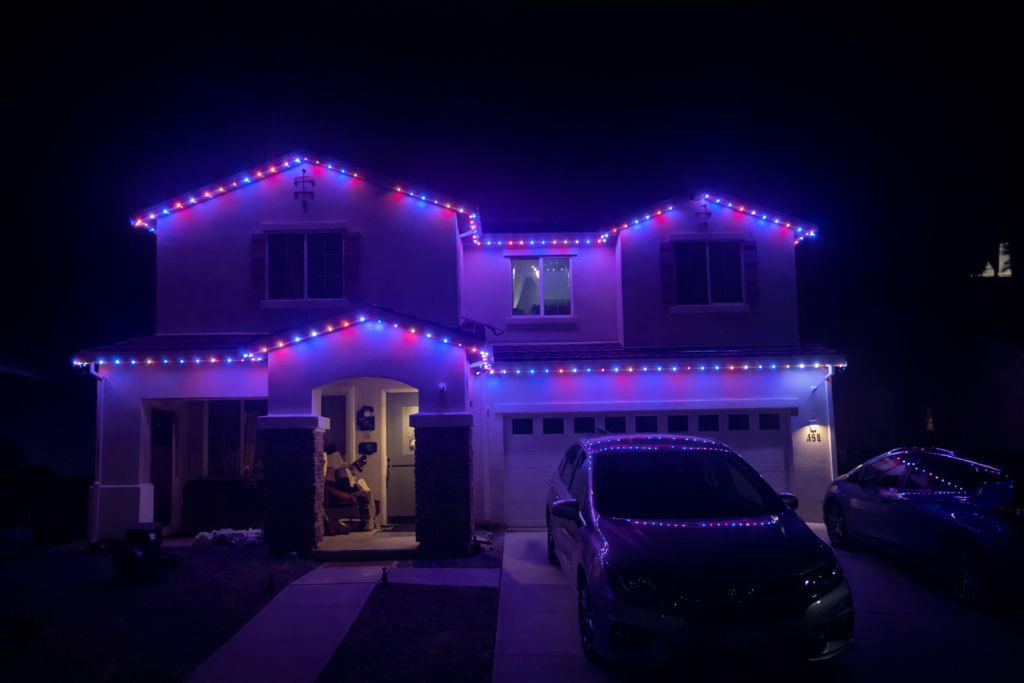
Roofline and eave lighting have become some of the most popular outdoor lighting choices in the Sacramento region. Permanent holiday lighting systems tuck small RGB LEDs under the eaves where they stay invisible during the day. A quick tap in the app changes the color, pattern, and timing for any season or event. Fourth of July, birthdays, sports nights, and of course Christmas all become easy with one install. Because these systems are hardwired by a licensed electrician, there is no climbing ladders every December. Interested in year-round color from your roofline? Click here for our permanent holiday lighting service.
Outdoor Lighting Ideas That Strengthen Home Security
Outdoor lighting is one of the most cost-effective tools for home security available to any homeowner. A well-lit property removes the dark corners and shadows that burglars rely on for cover. Studies from law enforcement groups consistently show that homes with layered outdoor lighting are less likely to be targeted. The right security lighting does not mean blinding floodlights on every corner; in fact, overly bright lights create harsh shadows that actually help intruders hide. A balanced plan uses motion sensors, smart controls, and proper placement to light what matters when it matters. Here are the outdoor lighting ideas that do the most for security without turning your yard into a stadium.
Outdoor Lighting Ideas Using Motion Sensors and Smart Controls
Motion-activated lights are the backbone of any security lighting plan. A quality motion sensor detects movement within a set range and triggers the light for a chosen length of time. Placement matters as much as the fixture itself; aim sensors across walkways, not straight out, so they pick up movement rather than distant passing cars. Most modern sensors offer adjustable sensitivity, range, and duration so you can tune out pets or swaying branches. LED floodlights paired with a good sensor use very little power while providing instant, bright coverage. Hardwired models outperform battery units because they never run low during a storm or long night. A licensed electrician can install them with proper grounding and weatherproof connections.
Smart outdoor lighting adds a layer of control that was impossible a few years ago. App-based systems let you turn lights on from anywhere, schedule them to mimic an occupied home, and receive alerts when motion is detected. Integration with video doorbells and security cameras means lights can trigger whenever the camera sees activity. Voice assistants make it easy to turn on the whole yard with one command if you hear something outside. Many systems also support vacation modes that randomize lighting patterns so the home never looks empty. These features work together to create a property that feels alert and protected.
Dusk-to-dawn photocells remain one of the simplest and most reliable security tools. These sensors turn lights on automatically at sunset and off at sunrise, so you never come home to a dark house. Pairing photocells with motion sensors gives you steady low-level light that brightens when someone approaches. This two-stage approach saves energy while keeping the property always visible. Professional installation ensures the sensors are positioned to avoid false triggers from porch lights or streetlights. Want motion lights installed the right way? Click here for our outdoor lighting installation service.
Outdoor Lighting Ideas for Entry Points and Dark Zones
Every door is a potential entry point and deserves dedicated lighting. Front doors should have bright, even illumination that lets you see clearly before opening up. Side doors, garage service doors, and back patio doors often get overlooked, yet these are the exact spots intruders prefer. A wall-mounted fixture above each door with a motion sensor eliminates hiding spots and startles anyone who approaches. Warm LED bulbs rated for wet locations hold up to the heat and rain Lincoln sees throughout the year. Matching fixtures across all entries keep the look consistent without compromising function. Proper wiring by a licensed electrician ensures the circuits are protected and code compliant.
Side yards and fence lines are common blind spots that benefit from targeted lighting. Narrow gates and the strip between the house and fence often sit in deep shadow, making them ideal cover for anyone with bad intent. Wall-mounted downlights or fence-cap solar lights break up that shadow and make the area feel open. Motion sensors work especially well here because you only need the light when something is moving. Low-voltage lines can be run along the fence without tearing up the yard. Keeping these areas lit also helps you safely take out the trash or check the dog at night.
Detached garages, sheds, and backyard structures should never be left completely dark. Outbuildings often store tools, bikes, and equipment worth thousands of dollars, yet many homeowners skip lighting them. A motion-activated floodlight on each side of a shed or detached garage deters theft and helps security cameras capture clear footage. Soffit-mounted downlights give a softer, continuous glow that pairs well with motion fixtures. Running power to remote structures requires permits and buried conduit in most California jurisdictions. A licensed electrician handles the trenching, wiring, and inspections so the job holds up for decades.
Outdoor Lighting Ideas Using Layered Lighting Zones
Layered lighting is the strategy that ties beauty and security together. The idea is simple; combine ambient light, task light, and accent light across different zones so the property is evenly covered. Ambient light gives the overall glow, task light focuses on specific areas like steps or doors, and accent light highlights features while filling in shadows. When all three layers work together, there are no deep dark patches for anyone to hide in. This approach also prevents the harsh glare that ruins both aesthetics and visibility. A professional design starts with a walk of the property at night to identify which zones need which layer.
Zoning your outdoor lighting on separate circuits gives you real control over how and when different areas light up. Front yard, backyard, driveway, and landscape can each have their own switch or smart control. Scenes let you turn on just the entry lights for evening arrivals or activate every zone during a dinner party. Separate circuits also help with troubleshooting; a problem in one zone does not take down the entire system. Load calculations matter here because outdoor lighting pulls from the main panel along with everything else in the home. A licensed electrician evaluates your current panel capacity before adding new circuits.
Backup power keeps your security lighting working when the grid does not. Rolling outages and storm-related blackouts leave many homes dark exactly when visibility matters most. Whole-home generators and battery backup systems keep essential circuits alive, including selected exterior lighting. Surge protection is just as important because power surges destroy LED drivers and smart controls faster than anything else. Installing whole-home surge protection at the panel shields every fixture in the yard. Combining layered lighting with backup power and surge protection gives you a security system that holds up in real-world conditions.
Why You Need Professional Outdoor Lighting Installation
Outdoor lighting looks simple until you start running wires, drilling into stucco, and calculating loads at the panel. The difference between a weekend project and a system that lasts twenty years comes down to experience, materials, and code compliance. California electrical code has specific requirements for outdoor circuits, GFCI protection, and fixture ratings that most homeowners do not know by heart. A licensed electrician brings the tools, permits, and expertise to make the installation safe, clean, and long lasting. The investment pays off in lower maintenance, fewer failures, and a finished look that holds up to scrutiny.
Why You Need a Licensed Electrician for Outdoor Lighting
Working with outdoor wiring means working with moisture, soil, and weather extremes that punish shortcuts. Every connection outside needs weatherproof housings, proper sealants, and GFCI protection to prevent shocks and shorts. A licensed electrician knows exactly which conduit, wire gauge, and fittings meet California code for your specific install. Pulling permits is not just paperwork; it creates a record that protects you if you ever sell the home. Inspections catch small issues before they turn into shorts, failed circuits, or fire risks. This level of detail is hard to match on a DIY install.
Load calculations are the part most homeowners never consider until something goes wrong. Adding a big landscape lighting system, a hot tub, and an EV charger to the same panel can push it past safe limits. A qualified electrician checks your panel, meter, and service entrance before adding new outdoor circuits. If the panel is already near capacity, an upgrade or subpanel keeps everything running safely. Skipping this step leads to tripped breakers, flickering lights, and sometimes damaged appliances. Proper planning at the start saves money and headaches later.
Fixture selection also benefits from professional input. Not every light sold online is rated for wet locations, and many low-cost fixtures fail within a year or two in the Sacramento climate. A good electrician guides you toward brass, copper, or marine-grade aluminum fixtures that stand up to heat, cold, and rain. LED drivers, transformers, and smart controls vary widely in quality, and the right parts make the system quieter, longer lasting, and easier to service. Honest recommendations with clear pricing keep surprises out of the final bill. That ethos drives every job done right.
Why You Need Surge Protection and Proper Circuits for Outdoor Lighting
Power surges are the silent killer of outdoor LED systems. A single nearby lightning strike, a utility fault, or a large appliance cycling on can send a spike through your wiring that fries LED drivers in an instant. Whole-home surge protection installed at the panel catches those spikes before they reach your fixtures. This single upgrade protects not just the outdoor lights but every electronic device in the house. Most surge protectors pay for themselves after one saved appliance. Professional installation ensures the protector is sized correctly and bonded to the panel properly.
Dedicated outdoor circuits keep your lighting system stable and easy to service. Running outdoor fixtures on the same circuit as a freezer, a hot tub, or a garage outlet creates trip hazards and brownouts. A separate circuit means the lights have their own breaker, their own wire run, and their own GFCI protection. This also makes future additions easier because the infrastructure is already in place. Homeowners planning pools, outdoor kitchens, or EV chargers benefit the most from this planning. Clean wiring at the panel pays off for years.
Grounding and bonding are the final pieces that hold the whole system together. Every outdoor fixture, transformer, and metal component must be properly grounded to protect against shock. This is especially important around pools, hot tubs, and wet garden areas. A licensed electrician checks grounding during every outdoor install and corrects any issues found in the existing system. Want whole-home protection installed the right way? Click here for our whole-house surge protection service.

Why You Need 3G Electric for Outdoor Lighting Installation
3G Electric has built a reputation across Lincoln, Roseville, Rocklin, and the greater Sacramento area for quality work and straight answers. As the recipient of Best of the Best Lincoln Electrician and a feature in SacTown Local, the team brings recognized expertise to every outdoor lighting project. Licensed and insured, every job is code compliant and focused on long term safety. Honest recommendations with clear pricing mean no surprises when the invoice arrives. Discounts for seniors and veterans show appreciation for the community served every day. The result is outdoor lighting that looks great, works reliably, and adds real value to the home.
The team holds certifications that matter in today’s electrical world. Tesla Certified Installer, Qmerit Certified Installer, and Jellyfish Authorized Dealer status give homeowners access to the best equipment and installation standards available. That same attention to detail carries into every outdoor lighting install, whether it is path lighting, landscape accents, or full permanent holiday systems. Materials are chosen to last, and installations are done to hold up through Sacramento summers and winter storms. Every customer gets the same commitment to outstanding service. That ethos shapes the entire company.
Ready to upgrade your outdoor lighting this spring? The team at 3G Electric designs and installs systems that improve curb appeal and strengthen home security at the same time. Call (916) 461-4080 or email info@its3gelectric.com to schedule a consultation. A walk of your property at dusk reveals exactly where lighting will make the biggest impact. From path lights to permanent holiday systems, every project is done with care, skill, and clear communication. Click here for our outdoor lighting installation service to get started.