
How to Prepare Your Home for an Electric Vehicle
The transition to electric vehicle ownership is an exciting milestone for any Lincoln homeowner. Driving off the dealership lot in a quiet and powerful car that requires no gasoline feels like stepping into the future. California is leading the nation in the adoption of electric transportation and the infrastructure is growing rapidly. While public charging stations are becoming more common the true convenience of an electric vehicle lies in the ability to charge it at home. Waking up every morning with a full battery eliminates the range anxiety that many new owners fear. However, achieving this seamless experience requires more than just parking the car in the garage and finding an outlet. Your home electrical system must be ready to handle the significant demand of refueling a large battery every night.
Preparing your home for an electric vehicle is a process that involves assessing your current electrical capacity and making necessary upgrades. The charger you install is technically known as Electric Vehicle Supply Equipment. It is not just an extension cord. It is a sophisticated device that facilitates the safe transfer of high voltage electricity from your grid connection to your car. Ensuring that this transfer happens safely and efficiently requires planning and professional execution. Many homeowners underestimate the electrical load of a car charger. It is often the single largest appliance in the house drawing more power than an air conditioner or an electric oven. Taking the time to prepare your home correctly ensures that your charging routine is safe, reliable, and convenient from day one.
Assessing Your Electrical Panel Capacity
The first and most critical step in preparing for an electric vehicle is determining if your electrical panel can handle the load. Your main service panel has a maximum amperage rating which represents the total amount of electricity your home can draw from the utility at any one time. Older homes in Lincoln often have one hundred amp panels which were sufficient for the appliances of the past. Today we have added central air conditioning, hot tubs, and modern electronics that have eaten up that capacity. Adding a car charger to a panel that is already near its limit creates a recipe for failure.
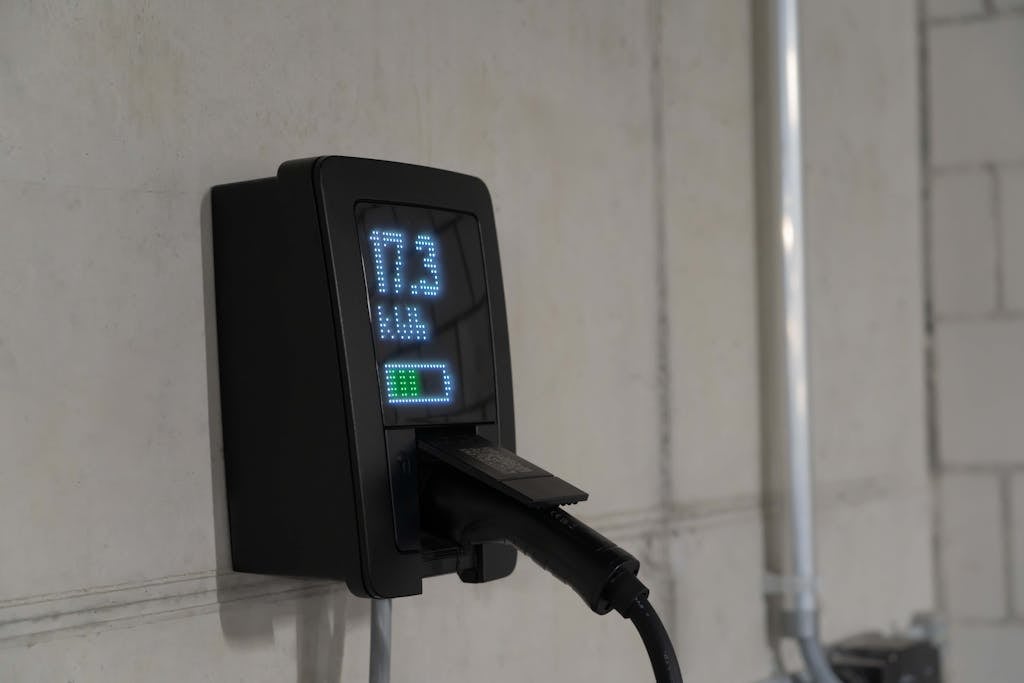
An electric vehicle charger is a continuous load. This means it runs for three hours or more at its maximum output. Electrical codes require us to size the circuit for continuous loads differently than intermittent ones. We must factor in a safety margin that prevents heat buildup in the wires and the breaker. If your panel is maxed out adding a fifty amp circuit for a fast charger is not safe. It will likely cause the main breaker to trip during peak usage times. This shuts off power to your entire house. A load calculation performed by a qualified electrician is the only way to know for sure if your current panel is up to the task.
If the calculation shows that you do not have enough spare amps you will need a service upgrade. This typically involves replacing your main panel with a two hundred amp unit. This upgrade provides the necessary headroom to charge your car at full speed while running your air conditioner and your electric dryer. It is an investment in the infrastructure of your home that adds value and safety. Sometimes we can use load management devices to avoid a full upgrade but a robust panel is always the preferred solution for long term reliability.
Understanding the Difference Between Level 1 and Level 2 Charging
New electric vehicle owners are often confused by the different charging levels available to them. Level 1 charging utilizes a standard one hundred twenty volt household outlet. Most cars come with a mobile cord that can plug into any regular wall socket. This seems convenient initially but the reality of Level 1 charging is often disappointing. It is extremely slow. You might get only three to five miles of range for every hour of charging. If you commute a significant distance daily a Level 1 charger will struggle to replenish the battery overnight. You might start the week with a full charge and slowly lose range day by day until you are forced to visit a public station.
Level 2 charging is the standard for home installations. It utilizes a two hundred forty volt circuit similar to what your clothes dryer or electric range uses. This higher voltage allows for much faster energy transfer. A typical Level 2 charger can add twenty to forty miles of range per hour depending on the amperage of the circuit and the onboard charger of the car. This speed allows you to arrive home with an empty battery and wake up to a full one. It transforms the ownership experience by making the car ready whenever you are.
Installing a Level 2 station requires a dedicated circuit from your electrical panel. This is not something you can simply plug into an existing outlet in the garage. We must run new wire that is sized correctly for the amperage of the charger. The wire gauge is critical. Using wire that is too thin will result in voltage drop and overheating. We typically install circuits ranging from forty to sixty amps for Level 2 charging. This maximizes the charging speed and future proofs the installation for the next generation of vehicles which may accept even higher power levels.
Choosing the Optimal Location
Deciding where to install your charger involves more than just finding an empty spot on the wall. You need to consider the logistics of how you park and how the car is designed. The charging port on electric vehicles is not standardized. Some cars have the port on the front driver side fender while others have it on the rear passenger side taillight. You need to install the charger in a location that allows the cord to reach the port easily without being stretched tight. A cord under tension is a tripping hazard and places stress on the connector.
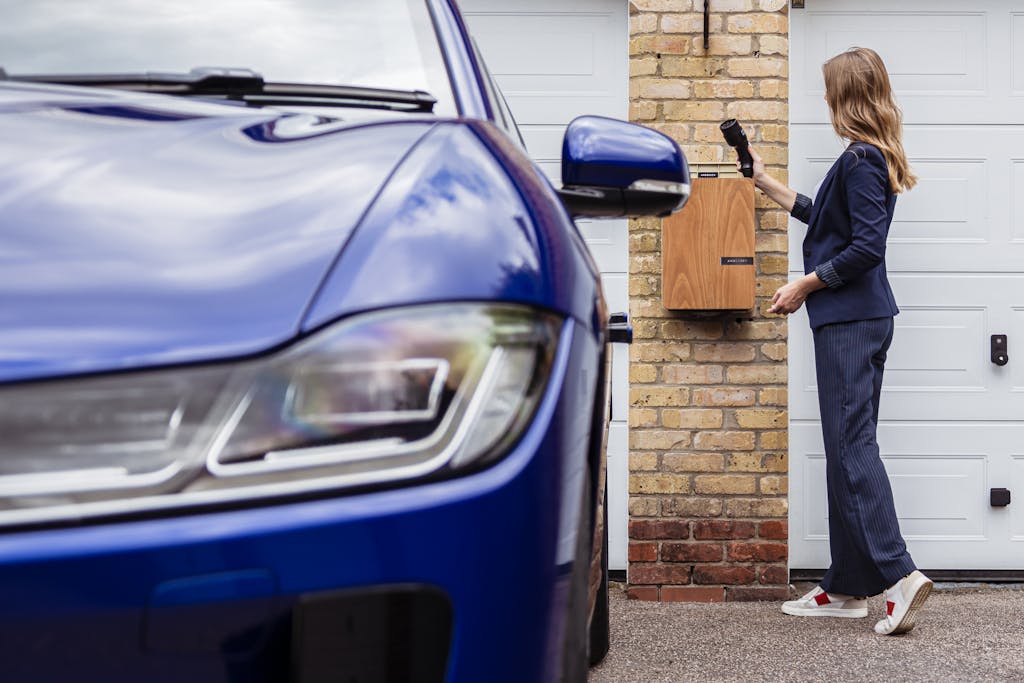
The length of the charging cable is a fixed constraint. Most units come with cables that are eighteen to twenty five feet long. While this sounds like a lot it gets used up quickly if you have to route it around the front of the car or between two vehicles. You should park your car in its usual spot and simulate the charging action. Think about where the cable will lay when it is plugged in. You want to avoid draping it over the hood of the car where it could scratch the paint. You also want to avoid running it across the main walking path in the garage where family members could trip over it.
We also have to consider the location of the charger relative to the electrical panel. The further the charger is from the panel the more wire we need to run. Long wire runs can increase the cost of installation significantly due to the price of copper. Sometimes mounting the charger on the side wall of the garage is more efficient than the back wall. Exterior installations are also an option if you park in the driveway. Outdoor rated units are designed to withstand the Lincoln weather but they require hardwired connections and weatherproofing to ensure safety.
Hardwired Connections Versus Plug In Units
When you select a Level 2 home charger you will face a choice between a hardwired unit and a plug in unit. A plug in unit comes with a heavy duty plug usually a NEMA 14-50 that fits into a matching receptacle installed on the wall. The advantage of a plug in unit is portability. If you move you can unplug the charger and take it with you leaving only the outlet behind. However, introducing a plug and receptacle into the circuit adds a point of failure.
Receptacles for EV charging are under immense stress. They must carry high current for hours at a time without heating up. Standard residential receptacles sold at big box stores are often not built for this duty cycle. They can melt under the thermal load of daily EV charging. If you choose a plug in installation we use industrial grade receptacles that are specifically engineered for continuous high amperage. These industrial outlets cost more but they provide the grip and thermal mass needed to prevent arcing and fires.
Hardwiring is the preferred method for most permanent installations. In a hardwired setup the electrical supply runs directly into the charger unit with no plug or outlet in between. This eliminates the connection point that is most likely to fail. It removes the risk of the plug becoming loose or corroded. Hardwiring also allows for a cleaner installation with fewer visible conduits and boxes. It is the safer and more robust option. Additionally, some chargers can operate at higher amperages only when they are hardwired because standard plugs are limited to fifty amp circuits.
The Necessity of Permits and Inspections
It is tempting for some homeowners to skip the permitting process to save time or money. This is a mistake that carries significant risks. Installing an EV charger involves altering the electrical system of your home. The City of Lincoln and the state of California require permits for this work to ensure public safety. The permit process includes a review of the planned work and a physical inspection after the installation is complete.
The inspector acts as a neutral third party who verifies that the work meets the National Electrical Code. They check that the wire is sized correctly and that the grounding is secure. They ensure that the load calculation was done properly and that the panel is not overloaded. An unpermitted installation might work fine for a while but it could harbor hidden defects. If a fire occurs and the investigation reveals unpermitted electrical work your insurance company may deny your claim. This leaves you financially responsible for the damage to your home and your vehicle.
When you sell your home unpermitted work becomes a liability. Savvy buyers will look for the permit history of any major upgrades. If they find an EV charger without a corresponding permit they may demand that you pay for an inspection or removal of the unit. We handle the entire permitting process for you. We submit the plans, pay the fees, and meet the inspector on site. This ensures that your installation is legal, safe, and documented. It adds value to your home rather than subtracting from it.
Smart Charging and Cost Savings
Electricity costs money and charging a large EV battery can noticeably increase your monthly utility bill. However, you can manage these costs by taking advantage of time of use rates. Most utility providers in California offer rate plans where electricity is cheaper during off peak hours. These off peak times are usually late at night when demand on the grid is low. Charging your car at 2 AM is significantly cheaper than charging it at 6 PM when everyone is cooking dinner and running the air conditioner.
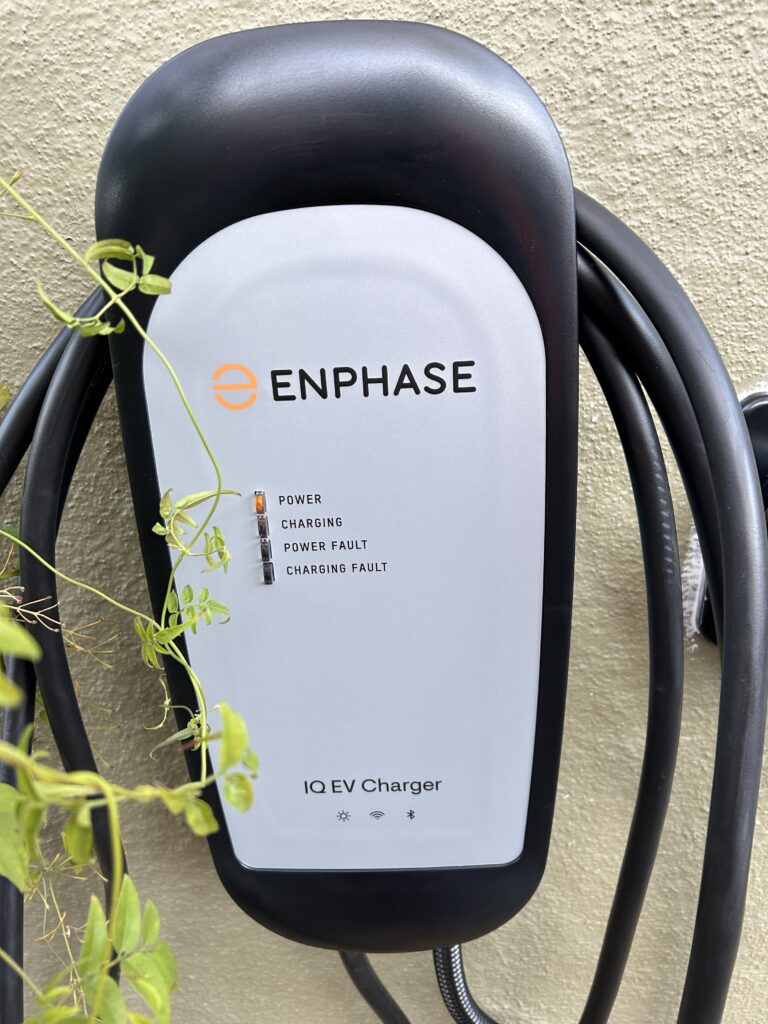
Modern EV chargers are smart devices. They connect to your home Wi-Fi network and allow you to control them via a smartphone app. You can program the charger to only deliver power during the off peak window. You simply plug the car in when you get home and the charger waits until the designated time to start. This automation saves you money without any extra effort on your part. You can also track your energy usage through the app to see exactly how much you are spending on transportation fuel.
Some smart chargers can also integrate with your solar power system. If you have solar panels on your roof you can configure the charger to use only the excess solar energy that would otherwise be sent back to the grid. This allows you to drive on pure sunshine. The integration of the car, the home, and the grid is becoming tighter. Having a smart charger installed by a professional ensures that you have the hardware capable of participating in this energy ecosystem. It transforms your car from a simple load into a managed energy asset.
Future Proofing Your Garage
The shift to electric transportation is not a temporary trend. It is the direction the entire automotive industry is moving. When you prepare your home for your first EV you should also think about the second one. Many households are becoming dual EV families. Installing a system that can accommodate two cars will save you from having to do electrical work again in a few years.
We can install dual chargers or set up a load sharing system. Load sharing allows two chargers to share a single electrical circuit. The chargers communicate with each other to split the available power. If only one car is plugged in it gets full power. If both are plugged in they split the power. This avoids the need for a second expensive panel upgrade. Thinking about the layout of the garage for two vehicles helps us place the first charger in a location that leaves options open for the future.
We also consider the possibility of bidirectional charging. This emerging technology allows the car battery to power the home during an outage. While not all cars or chargers support this yet the infrastructure requirements are specific. Installing conduit that is large enough to handle future wiring upgrades is a smart move. We build systems that are flexible and scalable. We want your garage to be ready for the technology of tomorrow not just the car you bought today.
Preparing your home for an electric vehicle goes beyond the services of an electrician. It requires a holistic look at the environment where your vehicle will spend the majority of its time. The heat in East Texas is a formidable force that can shorten the life of batteries and degrade electronic components. By treating your garage as a conditioned extension of your home, you provide a sanctuary for your vehicle. Whether you opt for a high-efficiency mini-split system or improved insulation and ventilation, managing the temperature is a smart financial decision.
R.C.’s A/C Reliable Climate specializes in turning uncomfortable spaces into climate-controlled assets. We understand the specific cooling needs of garages in our local climate. Our team can evaluate your space and recommend the perfect ductless solution to protect your new electric vehicle. We focus on efficient, reliable installations that add value to your home and longevity to your car. Do not let the Texas heat undo the benefits of your switch to electric. Contact us today to discuss how we can help you create the perfect charging environment.